 ChatGPT
 Perplexity
 Claude
 Google AI Mode
 Grok
Quick answer — what is SEO in 2026?
SEO in 2026 is still making your pages easy for Google to find, understand and trust — now with AI answers on top of the results. Google says optimising for its AI features is still SEO. What changed is the click: fewer people click through when an AI answer appears, so pages must be quotable as well as rankable.
What changed in 2026 — and what did not
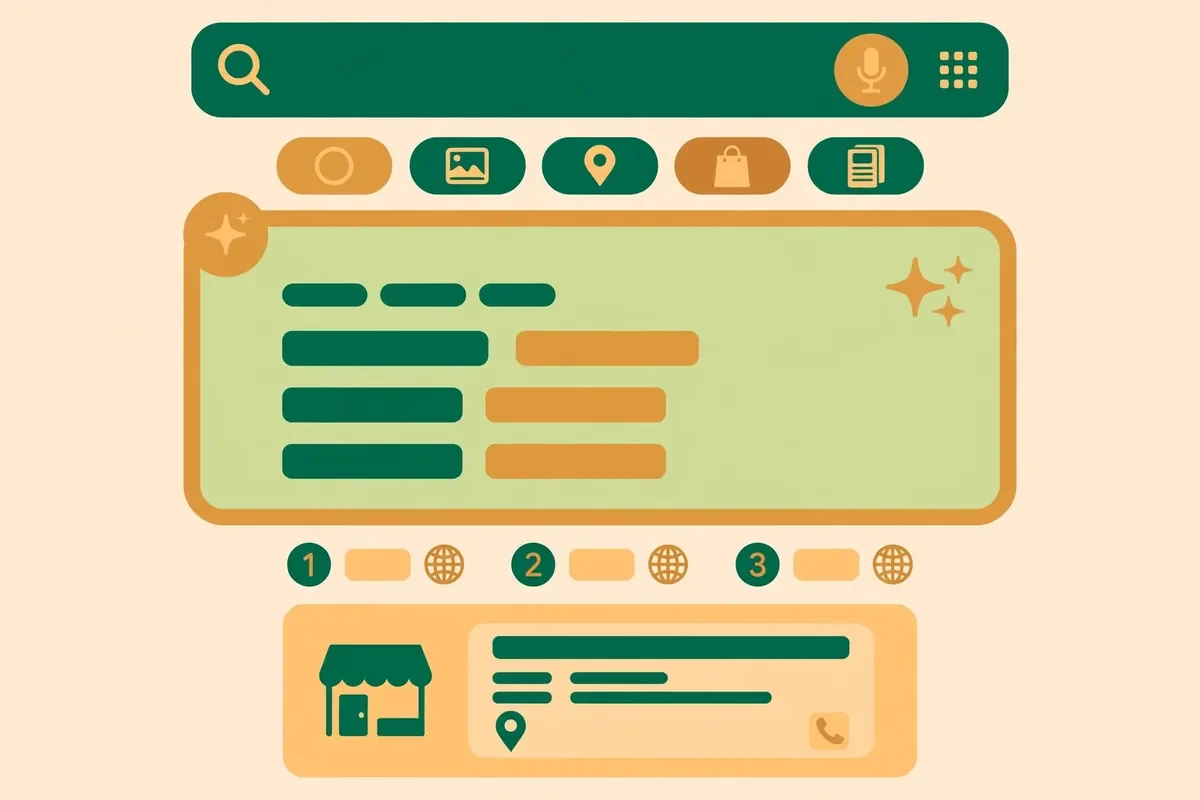
The biggest change is how results look. Google's AI Overviews and AI Mode now answer many questions at the top of the page, drawing on pages from Google's index. In May 2026 Google published one guide for this, and its message was blunt: generative AI features "are rooted in our core Search ranking and quality systems", and optimising for them "is still SEO". There are no extra technical requirements to appear — a page must be indexed and eligible to show a snippet, and its site must be included in Search Console's Search generative AI setting, on by default since 31 August 2026.
The click changed too. Pew Research Center tracked the real browsing of 900 US adults in March 2025: on pages with an AI summary, people clicked a traditional result in 8% of visits, against 15% without one, and only 1% clicked a link inside the summary. Sessions ended after 26% of searches with a summary, against 16% without. It is an observational study, not a controlled experiment, and Google disputed its methodology — but the direction matches what site owners saw in 2026: fewer clicks per search, and more value in being the page an answer quotes.
What did not change is the job underneath. Google still crawls, indexes and ranks pages, and it still rewards the same things: pages it can reach, content written by people who know the subject, a business it can identify and trust, and evidence from elsewhere that the business is real. The March 2026 core update shook rankings, but it did not change that order of work — an AI answer can only quote a page that already exists, is indexed and is easy to lift.
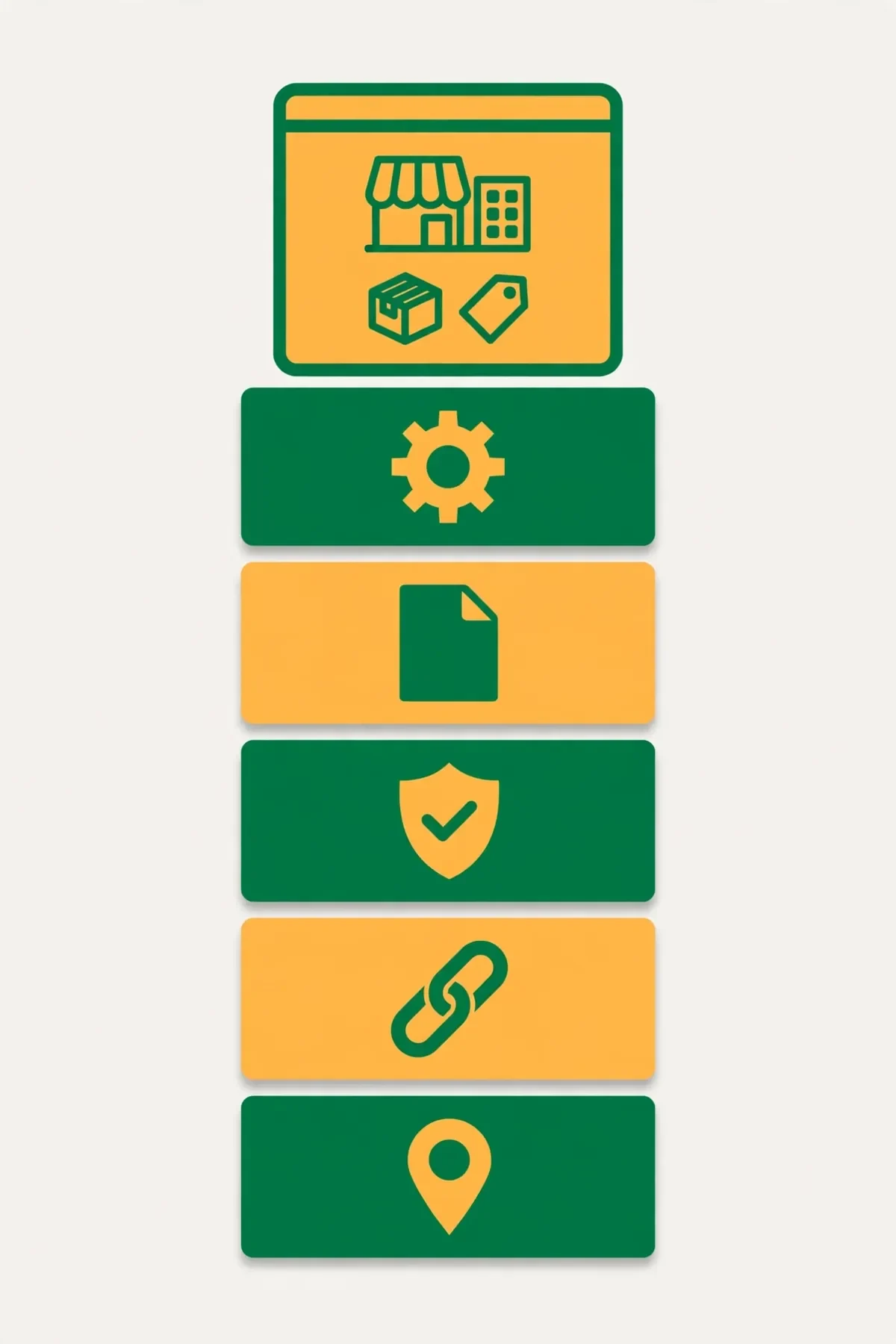
Foundation 1 — Technical: can Google reach your pages?
Nothing else works until this does. A page that is not indexed cannot rank, and a page that is not retrieved cannot be cited in an AI answer either. Start here, and check it before you write a word of new content.
First, confirm your important pages are indexed. Search Console's Pages report shows which pages Google has indexed and which it has left out, and why. A page left out because of a noindex tag or a blocked robots.txt rule is a fix that takes minutes and can recover traffic the same week. Check Bing too — ChatGPT search leans heavily on Bing's index, so a page missing from Bing is missing from ChatGPT answers as well.
Second, make the site fast and usable on a phone. Google measures real user experience with Core Web Vitals, and it evaluates your site primarily on mobile. A page that takes five seconds to load loses visitors before your content gets a chance. Fix the big images, remove unused plugins and scripts, and test the pages that earn money first — homepage, main service pages, contact page.
Third, keep the structure simple: every important page a few clicks from the homepage, with a clear URL and internal links that show Google which pages matter most. AI systems lift passages from pages they can navigate to and understand, not from pages buried five levels deep. Full checklist.
Foundation 2 — Content: answer the question better than anyone else
Content is where most small businesses win or lose, because it is the one foundation money cannot buy. Google's ranking systems aim to surface helpful, reliable content made for people, not content made to catch search traffic. The warning signs are content made mainly to attract visits, heavy automation across many topics, and summaries of what others have already said without adding anything.
A founder-led business has an edge a content farm cannot copy. You know the questions customers ask on the phone, the mistakes they make, and what things really cost. Write that down. A page only you could have written — a real price range, a real example, a real photograph of the work — is hard to outrank and easy to quote.
Practically, that means one page per question. Name the question in the heading, answer it in the first two sentences, then explain below. Give the reader something they cannot get from the AI summary: your own numbers, your own process, your own photos, a comparison table. And keep pages current — an outdated price or rule is the fastest way to lose trust with readers and Google. For the AI side of this work, see the GEO pillar and the AI Search Optimization article.
Foundation 3 — E-E-A-T and trust: can a stranger believe you?
E-E-A-T stands for Experience, Expertise, Authoritativeness and Trustworthiness. Google says trust matters most, and that E-E-A-T is not a ranking factor in itself — it describes what good content looks like. In practice: who wrote it — put real names on content and link to an author page; how it was made — say so if you used AI in a way readers would wonder about; why it exists — to help the visitor, not to catch search traffic.
For a small business, trust is mostly a proof system, not a writing trick. Show the business is real: an About page with real details, a contact page with a consistent name, address and phone number, and policies where they apply. Show the work: photos of real jobs, project examples, testimonials, reviews, licences and certifications. Keep the same business facts everywhere — your site, your Google Business Profile, LinkedIn and directories — because an engine that cannot identify your business cannot credit it. The full treatment is in the E-E-A-T guide, and the same signals now decide AI citations as well as rankings.
Foundation 4 — Links and mentions: does anyone else vouch for you?
A perfect page with no author, no source and no identifiable business behind it can be used without ever being credited. Links and mentions are how the rest of the web tells Google your business is real — and in 2026, how AI systems find you. Perplexity, ChatGPT and Google's AI features all lean on third-party surfaces: directories, review sites, local lists and editorial pages.
Earn them the slow way. Get listed, complete and current, on the directories and roundups that already rank or get cited for your category. Ask happy customers for a Google review, and answer every review, good or bad. Write something worth linking to — a genuine guide, a local price survey, a comparison — and tell the people it helps that it exists. One link from a real local newspaper, trade body or supplier beats fifty directory listings nobody reads.
Do not buy links or mentions. Google says inauthentic mentions are not likely to help, and a paid link scheme is the one shortcut that can still earn a penalty. The same rule applies to AI citations. If a package promises a fixed number of links, citations or rankings for a fixed price, that is the warning sign, not the offer.
Foundation 5 — Local: can people near you find you?
Keep your Google Business Profile complete and honest: the right categories, the real service area, opening hours that match reality, and photos of the actual business. Keep your name, address and phone number identical everywhere. Collect reviews steadily and reply to all of them. Give every service its own page with distinct content, and a location its own page only if the content is genuinely different — near-identical location pages are thin content.
For a Dhaka business, the same rules apply in a smaller pond: people searching "SEO expert Dhaka" want a person they can meet, not a faceless agency, so a local page with real work and reviews from that area beats a generic page every time.
The 30-60-90 day plan
Days 1–30: fix the foundation. Check indexing in Search Console and Bing Webmaster Tools, fix accidental noindex and robots.txt blocks, and confirm your site is included in Search Console's Search generative AI setting. Speed up the homepage and the top three service pages on mobile. Complete the Google Business Profile, fix inconsistent business details, and write down a baseline: enquiries, calls, and the ten keywords that matter.
Days 31–60: write the pages that earn money. Write one page per core service, each answering its main question in the first two sentences, with a real price range, a real example and a named author. Add internal links from your blog to those service pages, and back to the guides that prove the expertise. Start collecting reviews — ask every happy customer, every week.
Days 61–90: earn mentions and measure. Get listed on the directories and roundups for your category, publish one genuinely useful guide, and run a fixed prompt panel: 20–30 questions your buyers actually ask, run in ChatGPT, Perplexity and Google on the same day. Note which pages were cited or ranked, and which were not. Then repeat — SEO compounds over 3–6 months, and the sites that win are the ones still doing the work in month four.
What to stop paying for
- A separate retainer for SEO, AEO and GEO on the same pages. Google says optimising for its AI features is still SEO — one job, not three packages.
- llms.txt as a ranking trick. Google ignores llms.txt for its AI features — its June 2026 update says they neither help nor harm visibility.
- A "special AI schema" package. There is no special schema.org markup for AI features. Standard Article and FAQPage schema matching the visible text is enough.
- A guaranteed ranking or citation. No one can guarantee either. A package that promises one is selling a promise it cannot keep.
- Keyword stuffing. The Princeton GEO study measured it as worse than doing nothing in the lab, and it reads badly to humans too. Those figures measure share of an answer's text, not traffic, and a later replication did not confirm them.
How to measure it
Measure the enquiry, not the ranking. A page can rank first and never be named in an AI answer, and a page can be cited without ranking in the top ten — Ahrefs found in March 2026 that only 38% of AI Overview citations came from top-ten pages.
Search Console. The Generative AI report, available to every site since 31 August 2026, shows impressions in AI Overviews and AI Mode by page, country, device and date. Impressions, not clicks — treat it as visibility, not traffic. Check it monthly, alongside the ordinary performance report.
GA4 and your own numbers. Track enquiries, calls and bookings, not just sessions. ChatGPT referrals carry utm_source=chatgpt.com. Note where each enquiry came from, and ask every new customer how they found you.
A monthly prompt panel. Keep a fixed list of 20–30 questions your buyers actually ask, and run them in ChatGPT, Perplexity and Google on the same day each month. Note: did an AI answer appear, and was your page named or linked? One answer is a sample; a monthly panel is a measurement.
Myths to stop believing
- "SEO is dead." It is not. The results page changed; the work of being findable and trustworthy did not.
- "AI Overviews killed clicks, so SEO is pointless." Clicks per search fell, but enquiries still come from the pages that are cited and ranked. The answer is to be quotable, not to quit.
- "You need to rank first to be cited." You do not. A clear, quotable passage from a page outside the top ten can be cited, and a first-place page with vague facts can be ignored.
- "More pages is always better." Ten thin pages lose to one page that answers the question completely. Publish less, and make each page the best answer you can write.
Checklist: start here, in order
- Indexed? Important pages appear in Search Console, with no accidental noindex or robots.txt block.
- AI features included? Your site is included in Search Console's Search generative AI setting.
- Fast on mobile? Homepage and top service pages load quickly.
- One question per page? Each key page answers its main question in the first two sentences.
- Quotable? Each key claim carries a number, a quotation or a linked source.
- Identifiable? Named author, credentials, identical business facts everywhere.
- Local complete? Google Business Profile finished, reviews coming in steadily.
- Measured? A monthly prompt panel, AI referrals in GA4, AI Overview impressions — checked, not guessed.
Frequently asked questions
Is SEO still worth it in 2026?
Yes — with honest limits. Fewer people click through when an AI answer appears, so SEO alone will not bring back 2023 click volumes. But the pages that rank and get cited still win the enquiries. If you stop, competitors who keep going take the citations.
How long does SEO take to work in 2026?
Indexing and technical fixes can show results within days to weeks. Rankings and citations build over weeks to months. A realistic first checkpoint is a 90-day comparison against your baseline, not a report after one week.
Do I need separate SEO, AEO and GEO services?
No. Google's position is that optimising for its AI features is still SEO. AEO is the passage work, making one passage the direct answer; GEO is the source work, making that passage easy to trust and cite. Pay for one job, not three.
What should a small business budget for SEO?
A tracker tool typically runs $29–$495 a month. Done-for-you work here sits inside the Growth plan ($899/month) and the Authority plan ($1,799/month, GEO included), starting with a free audit.
Can a small business outrank a big competitor?
Sometimes, for the searches that matter. A big site wins on breadth; a small business wins on depth — one service, one place, one question answered better than anyone else, with real prices, real photos and real reviews. That is also the page AI answers quote most.
What to do next
Do the foundations in order: make the site reachable, write one page per question from real experience, prove the business is real, earn mentions, finish the local profile. Measure for 90 days before judging it.
Every engagement starts with a free audit. Request one — it now includes an AI-visibility check: crawler access, Bing and Google indexation, and a 10-prompt citation test across ChatGPT, Perplexity and Google.

Abu Hosain
Digital Marketing Strategist & White-Hat SEO Expert — 7+ years helping businesses worldwide grow with SEO, AEO and GEO.