SEO Updates · 13 min read
Generative Engine Optimization (GEO): How to Get Cited by ChatGPT, Perplexity & Google AI Overviews

 ChatGPT
 Perplexity
 Claude
 Google AI Mode
 Grok
GEO in 60 seconds
Generative Engine Optimization (GEO) is the practice of making your content easy for AI answer engines — ChatGPT, Perplexity, Google AI Overviews and AI Mode, Claude and Copilot — to find, trust and cite.
It has three parts, in this order: 1) Retrievable — the engine's search can fetch and index your page. 2) Quotable — the page contains a clear, specific, sourced statement worth lifting. 3) Identifiable — the engine knows exactly who you are, because your name, expertise and facts are consistent everywhere. Miss any one of the three and you will not be cited, however good the other two are.
This is the pillar guide for the GEO service on abuhosain.com, for owners and marketers who have noticed traffic falling even when rankings hold. It explains why, what the research proves, and a seven-step playbook you can run in 90 days.
Why rankings alone stopped guaranteeing visibility
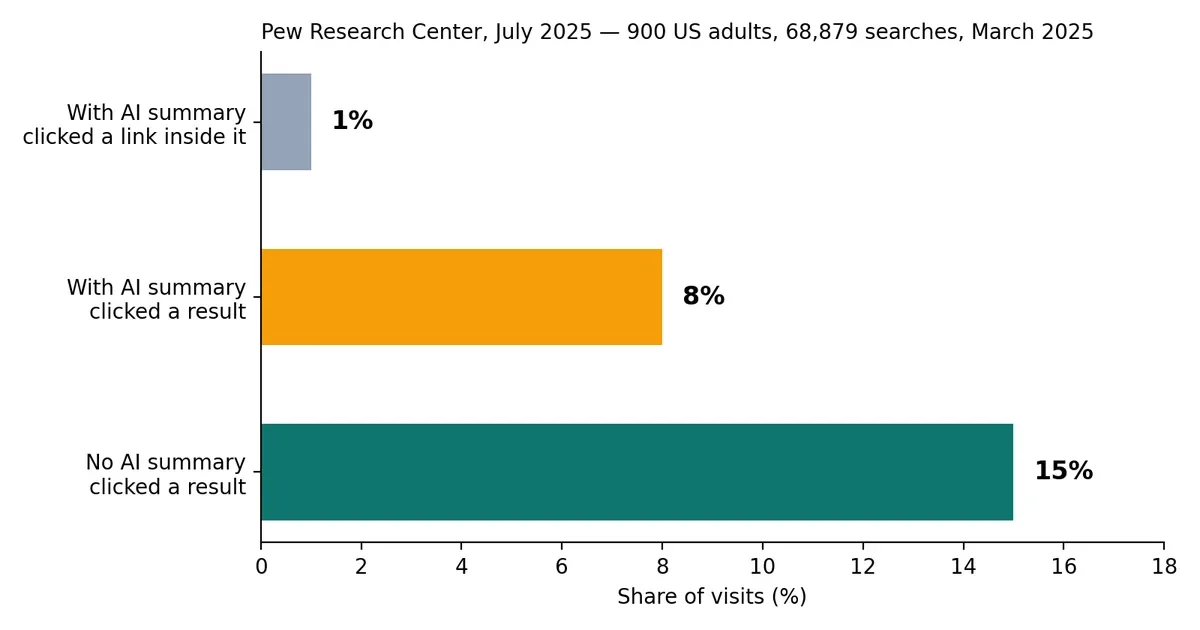
Pew Research Center tracked the real browsing of 900 US adults across 68,879 Google searches in March 2025. When an AI summary appeared, people clicked a normal result on just 8% of visits, compared with 15% when no summary appeared — and they clicked a link inside the summary on only 1% of visits. About 26% of visits ended right there, on the results page.
Ahrefs found the same direction from the ranking side. Across 300,000 keywords, the click-through rate of the page in position 1 was 34.5% lower when an AI Overview appeared (April 2025 study), and 58% lower in its February 2026 update using the same method. The lesson is not that SEO stopped working. It is that the prize moved: part of the value now sits inside the answer — in being named and cited — not only in the click that follows it.
GEO, SEO and AEO are three jobs, not three names for one job
The terms are often sold as replacements for each other. They are not. Each one wins a different moment in the same journey, and a page normally needs all three.
What it winsWhat you optimiseSEOA ranking in the classic resultsCrawlability, indexation, topical coverage, internal links, page experienceAEOBeing the direct answer — a featured snippet, a People Also Ask box, a voice answerQuestion research, concise answer blocks, FAQ structure, entity-clear writingGEOA mention or citation inside a synthesised, multi-source AI answerQuotable facts, statistics, quotations, cited sources, entity clarity, off-site mentions
In short: SEO gets you into the candidate set. AEO makes one passage answer-ready. GEO makes that passage the one the model quotes and credits. Anyone who tells you to abandon SEO for GEO has misunderstood the pipeline — the AI answer is built from search results in the first place. Read the full white-hat SEO service to see the foundation this sits on.
How an AI engine chooses what to cite: three gates
ChatGPT with search, Perplexity, Google AI Overviews and AI Mode all follow the same broad pattern, called retrieval-augmented generation (RAG). The engine turns the user's question into one or more searches — Google calls this query fan-out — retrieves candidate pages, extracts passages, then writes an answer and attaches citations to some of them. That creates three gates:
Retrieval. Your page must come back in the engine's internal search. This is mostly classic SEO: indexed, relevant and authoritative enough for the rephrased, often longer query the model generated — not just for the words the user typed.
Selection. From roughly 10 to 30 candidates, the model keeps the passages that answer most directly. Self-contained paragraphs with a specific fact, number or definition beat general introductions every time, because the model can lift them without rewriting.
Citation. The engine attaches your URL as a source, or names your brand in the text. Clear authorship, a recognisable entity and consistent facts make that attribution safe for the model to make.
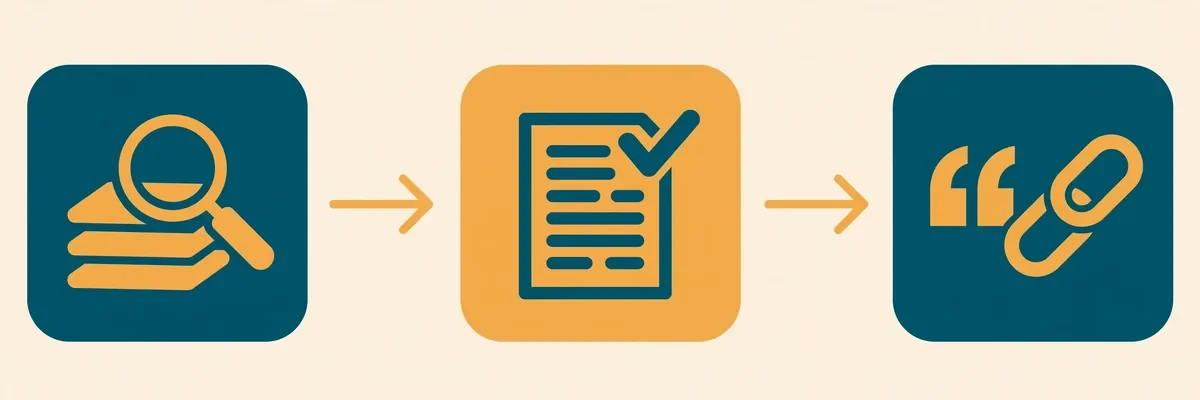
Diagnose a missing citation by gate, not by gut feel. Not retrieved? Fix indexation and topical relevance. Retrieved but not selected? Fix the passage — make it specific and quotable. Selected but not credited? Fix entity signals: author, About page, consistent business facts, and mentions on sites other than your own.
What the research actually found — and what it did not
The term GEO comes from a paper by Pranjal Aggarwal and colleagues at Princeton and IIT Delhi, first posted in November 2023 and published at KDD 2024. The team built a benchmark called GEO-bench — 10,000 queries — fed the top five Google results for each query to a language model, rewrote one source with one of nine tactics, and measured how much of the generated answer then drew on that source.
The strongest tactics were adding quotations from credible sources, adding statistics, and citing sources — roughly +30% to +40% more visibility in the AI answer for the best tactics. Improving fluency and clarity also helped. Keyword stuffing was negative — worse than doing nothing.
One finding matters especially for smaller sites. When the researchers added cited sources to a page that had ranked fifth, its share of the generated answer rose sharply — reported at +115.1% in that scenario — while the already top-ranked page lost share. GEO, in other words, can level a field that classic rankings do not.
Read the study honestly — its limits: the 30–40% figures measure share of an answer's text, not clicks, traffic or citation probability. The experiment used a simulated engine and pages that were already in the top five results — so it shows how to earn more of an answer once you are retrieved, and says nothing about getting retrieved in the first place. Later replications have found smaller and less consistent effects. Use the study as evidence that specific, sourced, quotable content beats vague content — not as a promise that any rewrite delivers 40% more traffic. Any provider who guarantees a citation percentage is selling you the headline, not the paper.
Google's own position supports that sober reading. In its May 2026 guide, Optimizing your website for generative AI features on Google Search, Google states that its AI features are rooted in its core Search ranking and quality systems, that there are no additional requirements to appear in AI Overviews or AI Mode, and that a page simply needs to be indexed and eligible to show a snippet. GEO is not a secret second algorithm. It is good SEO, written for a reader that is now also a machine.
The GEO playbook: steps 1 to 3
Step 1 — Let the right crawlers in
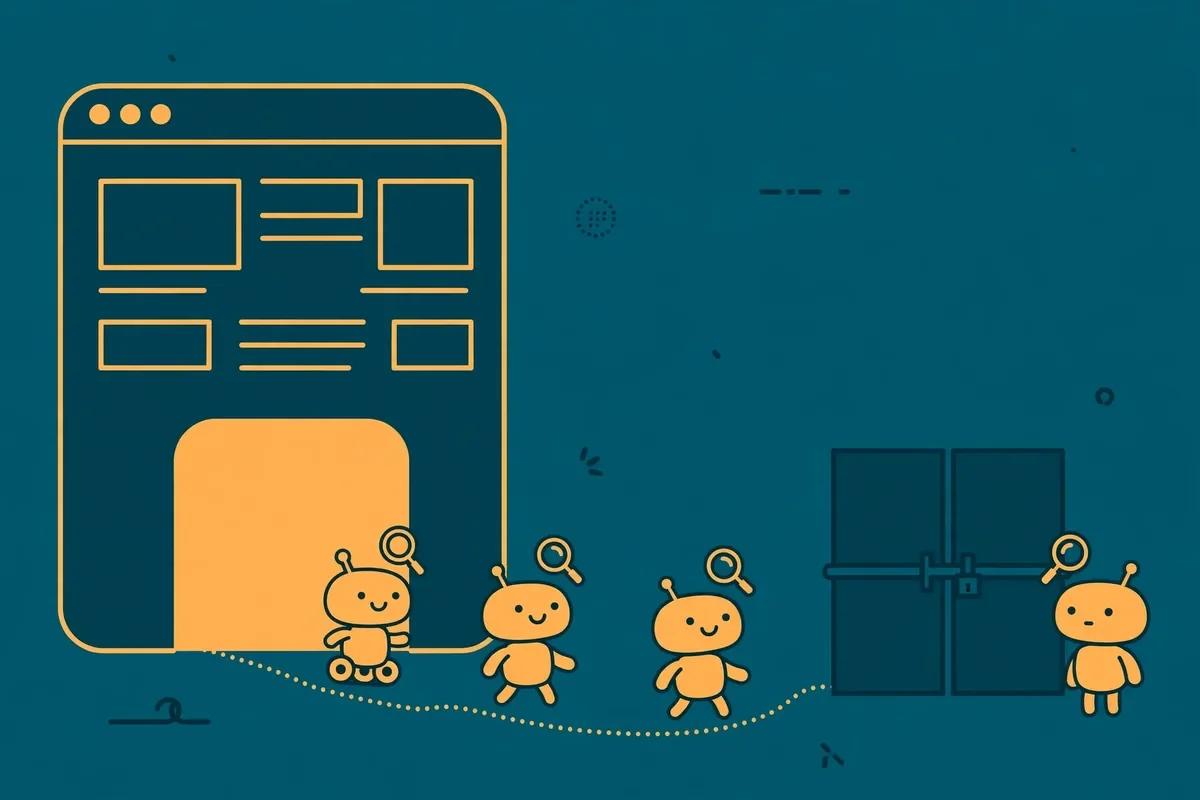
Each AI provider separates its bots by job, and blocking the wrong one removes you from its answers while leaving your site otherwise untouched. Allow the search crawlers: OAI-SearchBot and ChatGPT-User for OpenAI / ChatGPT, PerplexityBot and Perplexity-User for Perplexity, Claude-SearchBot for Anthropic / Claude, Googlebot for Google AI Overviews and AI Mode, and Bingbot for Microsoft / Copilot. Training crawlers are a separate decision — GPTBot for OpenAI, ClaudeBot for Anthropic, Google-Extended for Google. You can appear in ChatGPT search while opting out of training: allow OAI-SearchBot and disallow GPTBot. Check your CDN and firewall too — many sites block these bots at the edge unknowingly — and confirm visits in server logs.
Step 2 — Get indexed everywhere the engines look
Google's AI features draw on Google's index. ChatGPT search leans heavily on Bing's index, which covers less of the web — so a page that is indexed in Google alone may simply not exist for ChatGPT. Submit your sitemap in Google Search Console and Bing Webmaster Tools, use IndexNow for new URLs, and keep important content in server-rendered HTML, not behind JavaScript a crawler may not execute. For a full check, follow the technical SEO audit step by step.
Step 3 — Write passages an engine can quote
This is the editorial heart of GEO. For every important question your buyers ask: Answer first. Put a direct, self-contained answer in the first one or two sentences under the heading — then explain, evidence and qualify below it. Be specific. Include the number, price range, timeframe, condition or exception. "SEO takes time" cannot be cited. "Most local sites in this study reached the local pack within 90 days" can be. Add a quotation and a citation. A short quote from a named person, plus a link to the primary source for each key claim — the two tactics the Princeton study found strongest. Use your own data. Original figures from your audits, projects and client work are the hardest content for a competitor to copy and the easiest for a model to treat as a source. Keep one idea per section, under a heading that is itself a clear statement or question, so a passage still makes sense when lifted out of the page.
The GEO playbook: steps 4 to 7
Step 4 — Make your entity impossible to confuse
Models cite sources they can identify. Put a named author with a short credentials bio on every article, keep an About page that states who you are, where you are based and what you specialise in, and make sure the same business name, services and facts appear consistently on your site, Google Business Profile, LinkedIn and directories. Add Article, Person and Organization structured data that matches the visible page. Schema does not earn a citation on its own — Google is explicit about that — but accurate structured data removes ambiguity about who said what. See how to add schema markup to WordPress and how to improve E-E-A-T for SEO.
Step 5 — Earn mentions on sites you do not own
AI answers synthesise the web, not just your domain. Third-party coverage — industry publications, podcasts, directories, review profiles, partner pages and genuine community answers — gives the model independent confirmation that you exist and are trusted. This is classic white-hat digital PR and link earning, pointed at a new target: being talked about accurately, in the same words your own site uses, wherever the engines read.
Step 6 — Structure the page for readers first
Use descriptive headings, short paragraphs, lists and comparison tables where they genuinely help, descriptive link text, and an FAQ section that answers real follow-up questions. Keep the page fast and readable on mobile. Do this for human clarity, not as a machine trick: a well-structured page helps selection because its passages are already self-contained, not because you chopped it into fragments.
Step 7 — Measure citations, not just rankings
You cannot manage AI visibility from rank tracking alone. Run a monthly panel instead: fix a list of 20–30 buyer questions — the prompts your customers would actually type into ChatGPT or Perplexity. Ask each one, in each engine, on the same day each month. Record whether you are mentioned, cited, and what is said about you. Track AI referrals separately in GA4, and AI Overview / AI Mode impressions in Google Search Console. Log which competitor or publication was cited instead of you — that page is your content brief for next month.
Stop paying for these GEO myths
Google's May 2026 guide includes an explicit mythbusting section. llms.txt: Google treats it like any other text file, with no special indexing or visibility benefit for Search. Content "chunking": no need to chop pages into tiny fragments — Google's systems can extract the relevant passage themselves. AI-specific rewriting: rewriting the same point for every keyword variation is unnecessary — AI systems understand synonyms and meaning. Special AI schema: there is no special schema.org markup for AI Overviews or AI Mode. Bought or planted mentions: seeking inauthentic mentions to influence what AI says about you is, in Google's words, not likely to be helpful — and it breaks the white-hat rule this site works by. Keyword stuffing: measured in the Princeton study as worse than doing nothing.
Your first 90 days
Days 1–30: Be retrievable. Audit robots.txt, CDN rules and server logs for the search crawlers in Step 1. Confirm indexation in Google and Bing, submit sitemaps, set up IndexNow. Build your 20–30 prompt panel and record the baseline: who gets cited today, if not you. Days 31–60: Be quotable. Rewrite your five highest-value pages answer-first, adding one sourced statistic, one quotation and clear author information to each. Publish one pillar guide in your core topic. Add FAQ sections drawn from real customer questions. Days 61–90: Be confirmed. Earn mentions: pitch two industry publications, complete every major profile with identical business facts, and ask satisfied clients for reviews that name the service. Re-run the prompt panel, compare against baseline, and turn every competitor citation into a brief for the next piece of content.
GEO checklist
Search crawlers allowed in robots.txt and at the CDN: OAI-SearchBot, PerplexityBot, Claude-SearchBot, Googlebot, Bingbot
Training-crawler policy decided separately (for example GPTBot) — not blocking search by accident
Sitemap submitted in Google Search Console and Bing Webmaster Tools; IndexNow active
Important content present in server-rendered HTML; server logs confirm AI bot visits
Every key page opens each section with a direct, self-contained answer
Every key claim carries a number, a named quotation or a linked primary source
At least one piece of original data or first-hand experience on each pillar page
Named author, credentials and About page; identical business facts on site, GBP, LinkedIn and directories
Article / FAQ structured data present and matching the visible text
Monthly prompt panel (20–30 buyer questions x ChatGPT, Perplexity, Google) recorded in a sheet
AI referrals tracked in GA4; competitor citations logged as future content briefs
No llms.txt, chunking, stuffing or bought-mention spend presented as "GEO"
Frequently asked questions
What is Generative Engine Optimization (GEO)?
Generative Engine Optimization is the practice of making your content easy for AI answer engines such as ChatGPT, Perplexity and Google AI Overviews to find, trust and cite. It combines technical SEO, quotable sourced writing and clear entity signals so your page is selected as a source inside an AI-generated answer.
Is GEO different from SEO?
Yes, but they build on each other. SEO wins a ranking in classic search results, and that retrieval step is how AI engines find candidate pages in the first place. GEO adds the work that gets a retrieved page quoted and cited inside the synthesised answer. You need SEO first; GEO without it has nothing to work with.
How do I get cited by ChatGPT?
Allow OpenAI's search crawler, OAI-SearchBot, in robots.txt and at your firewall, make sure your pages are indexed in Bing — the index ChatGPT search leans on — and write answer-first passages with specific, sourced facts under a named author. Then test monthly with the exact questions your buyers ask, and improve the pages ChatGPT cites instead of you.
Do I need llms.txt or special schema for AI Overviews?
No. Google states there are no additional requirements to appear in AI Overviews or AI Mode, no new machine-readable files are needed, and there is no special schema.org markup for AI features. A page must be indexed and eligible to show a snippet in normal Search.
How long does GEO take to work?
Crawler and indexation fixes can make you eligible within days, but citations build over weeks to months as engines re-crawl, as your content earns mentions, and as you publish quotable pillar pages. A realistic first checkpoint is a 90-day prompt-panel comparison against your baseline, not a ranking report after one week.
How much does GEO cost?
On abuhosain.com, GEO is included in ongoing SEO work rather than sold as a magic add-on. Plans run from $349 to $1,799 per month, with GEO and AI Overviews optimization in the top Authority plan. See pricing. Every engagement starts with a free audit, so the first step costs nothing but the time to ask.
Sources: Aggarwal et al., "GEO: Generative Engine Optimization," KDD 2024 (arXiv:2311.09735) — GEO-bench, 10,000 queries. Pew Research Center, "Google users are less likely to click on links when an AI summary appears in the results," July 2025. Ahrefs, "AI Overviews Reduce Clicks by 34.5%," April 2025, and February 2026 update (58%). Google Search Central, "Optimizing your website for generative AI features on Google Search," May 2026, and "AI features and your website." OpenAI, Perplexity and Anthropic crawler documentation (OAI-SearchBot, PerplexityBot, Claude-SearchBot).
Every engagement starts with a free audit. Tell us about your website and goals — we will review your site and come back with real, specific observations, including an AI-visibility check: crawler access, Bing and Google indexation, and a 10-prompt citation test for your market. Contact Abu Hosain.

Abu Hosain
Digital Marketing Strategist & White-Hat SEO Expert — 7+ years helping businesses worldwide grow with SEO, AEO and GEO.