 ChatGPT
 Perplexity
 Claude
 Google AI Mode
 Grok
Quick answer — how to get cited by Perplexity
To get cited by Perplexity, allow PerplexityBot to crawl your site, answer one real question per page in the first two sentences, and make every claim checkable with a number, a date or a named source. Perplexity searches the live web for every question and shows its sources as numbered, clickable links — so a clean, quotable passage can be cited even if your site is small.
Why is Perplexity the most winnable AI surface?
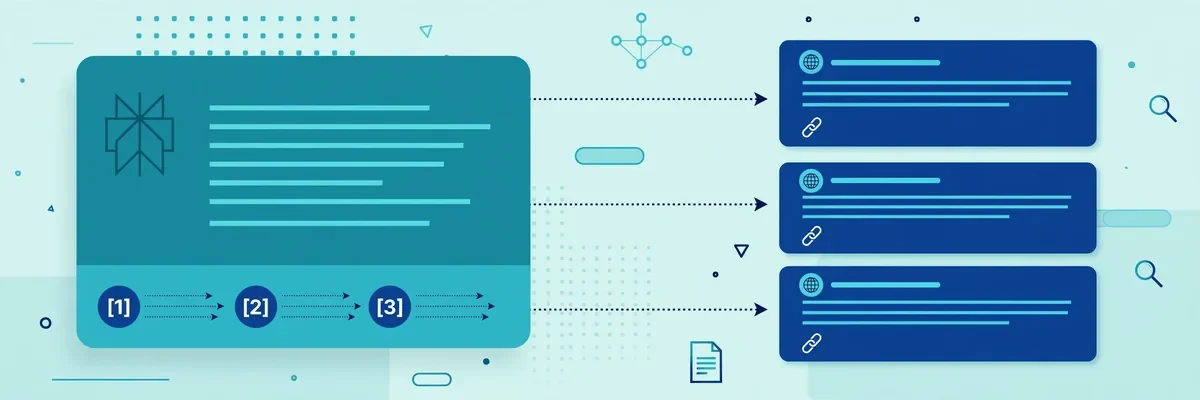
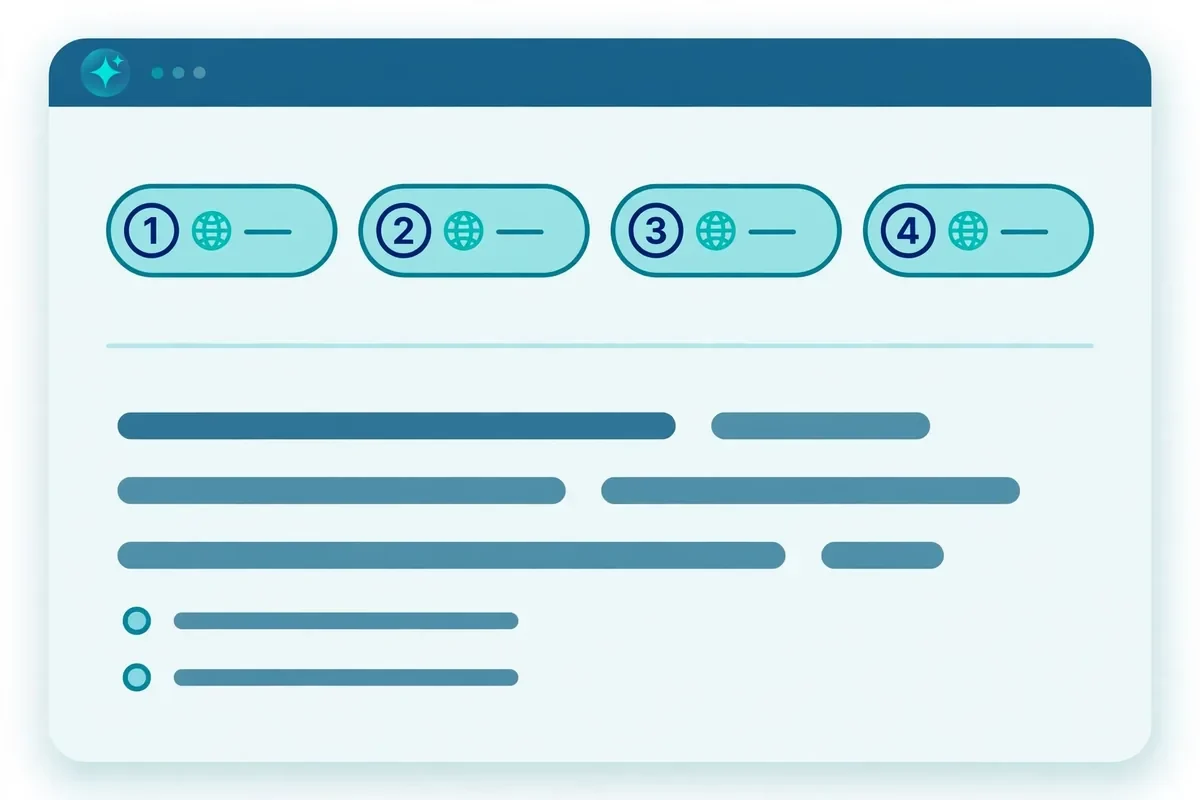
Perplexity is built around the citation. Where Google shows ten blue links and ChatGPT sometimes answers with no links at all, Perplexity writes one answer and puts numbered sources next to the claims — [1], [2], [3] — that anyone can click to check. Its help centre says it searches the internet in real time for every question and gives each answer numbered citations linking to the original sources. Citations are not an extra feature. They are the product. That changes the game for a small site: on Google you must outrank giants, but on Perplexity a reachable, fresh, easy-to-lift page can be cited for a query where a giant dominates elsewhere. One tester watched a small site get cited by Perplexity for queries where it was page four in Bing, because its format was cleaner than the page-one result. Every answer also shows its sources, so you can test a page and see within days whether you were cited.
How does Perplexity pick its sources?
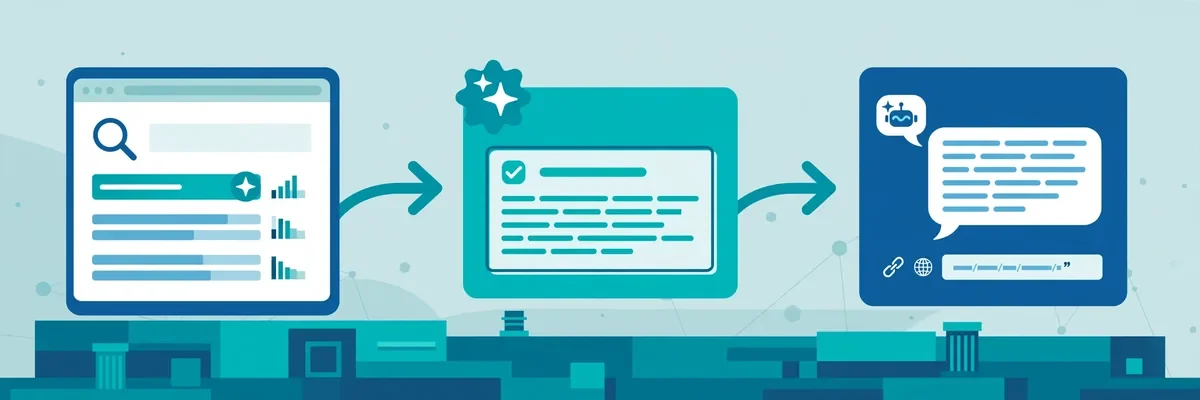
Perplexity searches first, then writes. When someone asks a question, it searches the live web, reads a shortlist of candidate pages, and writes one answer from the passages that answer it most directly, attaching a numbered citation to each claim. The GEO pillar calls this three gates — retrieval, selection, citation — and failing any one means no citation.
The funnel is tight. In one panel of 146 B2B questions and 2,044 answers in October 2026, Perplexity's source list held a median of ten pages per answer, and only three received a numbered citation — a 30% read-to-cite conversion. Getting read is not the same as getting cited.
What do PerplexityBot and Perplexity-User do?
Perplexity documents two agents, and they do different jobs. Confusing them is the most common technical mistake in Perplexity work.
PerplexityBot is the automatic search crawler. Perplexity describes it as "designed to surface and link websites in search results on Perplexity", and says it is not used to crawl content for AI foundation models. It follows robots.txt. Perplexity recommends allowing it in robots.txt and permitting requests from its published IP ranges if you want your site to appear in its results.
Perplexity-User is different. It visits a page when a user's question needs it, and may link that page in the answer. Because a user asked for the fetch, it generally ignores robots.txt.
The practical consequence is simple: blocking PerplexityBot removes you from the index that feeds answers. If you want Perplexity citations, let PerplexityBot in — in robots.txt, and at your firewall or CDN, where a bot rule can silently block it even when robots.txt looks fine. Perplexity publishes the IP ranges for both agents as JSON files, and says to always use the current lists, because they change. Robots.txt changes can take up to 24 hours to reach its systems.
What does a citable page look like?
Perplexity's models quote passages, and some passages are simply easier to quote.
Question-shaped headings. Use the question your buyers actually type, word for word, as the heading.
A self-contained answer under each heading. The first paragraph resolves the question on its own — no "as we discussed above". Answer in the first two sentences, then explain below.
Factual density. Numbers, dates, named entities and concrete claims. "Our Dhanmondi clinic charges BDT 8,000–12,000 for a root canal, over two visits" can be checked and quoted. "Many businesses save money with us" cannot.
Visible dates and authorship. Perplexity favours recent content. Show a publication date and an update date, and name the author with credentials. Update the date only when you have added substantive new information.
Lists and tables. Discrete, scannable units cite more cleanly than long narrative essays. A list of nine factors, each with a paragraph of explanation, gives Perplexity ten high-quality extraction points. In one scan of 297 Perplexity answers, 73.6% of the 3,067 listed pages were listicles, while vendor pages were only 2.4%.
The playbook, step by step
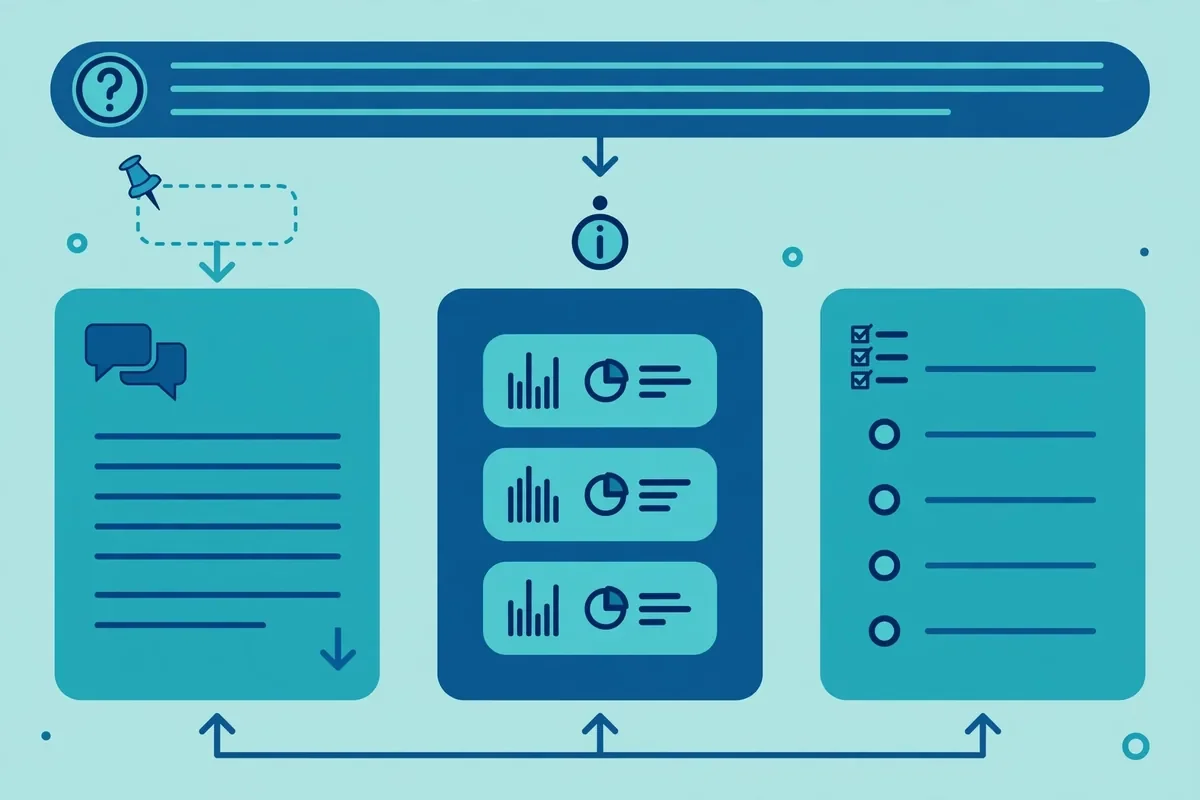
Step 1 — Let PerplexityBot in, and prove it: Add User-agent: PerplexityBot / Allow: / to robots.txt, allow the published IP ranges at your firewall or CDN, then read your logs. A 200 response with your main copy in the HTML is what good looks like. A challenge page is not. Test the live page with JavaScript off: if your main copy only appears after JavaScript runs, PerplexityBot has nothing to index.
Step 2 — Pick one question per page: Choose questions your buyers actually ask, that Perplexity already answers with sources. Ask the question in Perplexity yourself and note who is cited. If the cited pages are weak, that is an opening.
Step 3 — Rewrite the page as a direct-answer document: Lead with a 60–100-word paragraph that fully answers the headline question. Use H2 headings phrased as the questions buyers type. Treat each H2 section as self-contained. Put a number, a quotation or a linked primary source behind every key claim. Add a comparison table where two options are being weighed.
Step 4 — Get onto the pages Perplexity already cites: Perplexity leans hard on third-party surfaces. In one October 2026 release, editorial publications took 30.4% of its classified citations, vendor-owned sources 28.4% and community platforms 12.7%, with reddit.com alone cited in 22.1% of the 6,847 answer runs observed. Be listed, complete and current, on the directories and roundups Perplexity already lists for your category. Do not buy mentions: they are not likely to help, and they break the white-hat rule this site works by.
Step 5 — Keep the page current, and measure it: Refresh the pages you want cited every thirty days with something substantive: a new 2026 stat, a corrected price, a new section. Perplexity weights freshness heavily. Then measure with a fixed prompt panel: 20–30 questions your buyers actually ask, run in Perplexity on the same day each month. For each one, note whether your page was listed, whether it was cited with a number, and which pages were cited instead. One answer is a sample; a monthly panel is a measurement.
What will not fix this?
- llms.txt as a citation trick. Perplexity has not documented llms.txt as a way into its answers, and Google Search ignores llms.txt files for its AI features. A text file does not earn a citation.
- Special "AI schema". There is no special schema.org markup for AI features. Standard Article and FAQPage schema that matches the visible text is enough.
- Keyword stuffing. The Princeton GEO study measured it as worse than doing nothing. Those figures measure share of an answer's text in a lab, not traffic or live Perplexity citations, and a later replication did not confirm them.
- Rewriting everything for AI. Google's May 2026 guide is blunt: optimising for its AI features is still SEO. The same foundation — indexed, snippet-eligible, quotable, identifiable — is what Perplexity needs too.
- Bought or planted mentions. They are not likely to help, and they break the white-hat rule this site works by.
Checklist: one page, ten minutes
- PerplexityBot allowed? robots.txt has a PerplexityBot group, and your firewall or CDN allows its published IP ranges.
- Logs prove it? Server or CDN logs show PerplexityBot getting a 200, not a 403 or a challenge page.
- One question, answered first? The heading asks it; the first two sentences answer it.
- Quotable? At least one number, date, quotation or named source on the page.
- List or table? A listicle or comparison table gives Perplexity clean extraction points.
- Dated and authored? Visible publication and update dates, and a named author.
- Identifiable? Named author, credentials, and consistent business facts on your site, Google Business Profile, LinkedIn and directories.
- Third-party presence? You are listed, complete and current, on the directories and roundups Perplexity cites for your category.
- Measured? The page is in your monthly Perplexity prompt panel, checked more than once per question.
- Honest? No claim in the article promises a citation.
Frequently asked questions
How long does it take to get cited by Perplexity?
Crawler and access fixes can make a page eligible within days, once PerplexityBot has fetched it — robots.txt changes can take up to 24 hours to reach its systems. Being cited is slower: a realistic first checkpoint is a 90-day prompt-panel comparison against your baseline.
Do I need to rank on Google to be cited by Perplexity?
No. Perplexity runs its own live index and rewards extractable passages, so a small site can be cited for a query where it does not rank on Google at all. Only 11% of the domains Perplexity cites are also cited by ChatGPT in one five-engine panel.
Should I block PerplexityBot to stop it using my content?
That is a choice some sites make on purpose, but if you block PerplexityBot you will not be surfaced or linked in Perplexity search results. Perplexity says PerplexityBot is not used to crawl content for AI foundation models, so blocking it is a search-visibility decision, not a training decision.
Why does Perplexity cite Reddit and listicles so often?
Because its job is to lift passages, and those formats are built from passages: a Reddit thread is a set of short, specific answers, and a listicle is a set of ready-made extraction points. In one scan, 73.6% of listed pages were listicles.
Is appearing in ChatGPT the same as appearing in Perplexity?
No. ChatGPT search leans on Bing's index and often answers with few or no links; Perplexity searches the live web for every question and shows numbered citations in every answer. The work overlaps, but each engine needs its own prompt panel, because their cited domains barely overlap.
What to do next
Do the jobs in gate order: let PerplexityBot in, make one page answer-first and quotable, then get listed where Perplexity already looks.
Every engagement starts with a free audit. Request one — it now includes an AI-visibility check: crawler access, Bing and Google indexation, and a 10-prompt citation test across ChatGPT, Perplexity and Google.

Abu Hosain
Digital Marketing Strategist & White-Hat SEO Expert — 7+ years helping businesses worldwide grow with SEO, AEO and GEO.