 ChatGPT
 Perplexity
 Claude
 Google AI Mode
 Grok
Quick answer — why does ChatGPT cite your competitors?
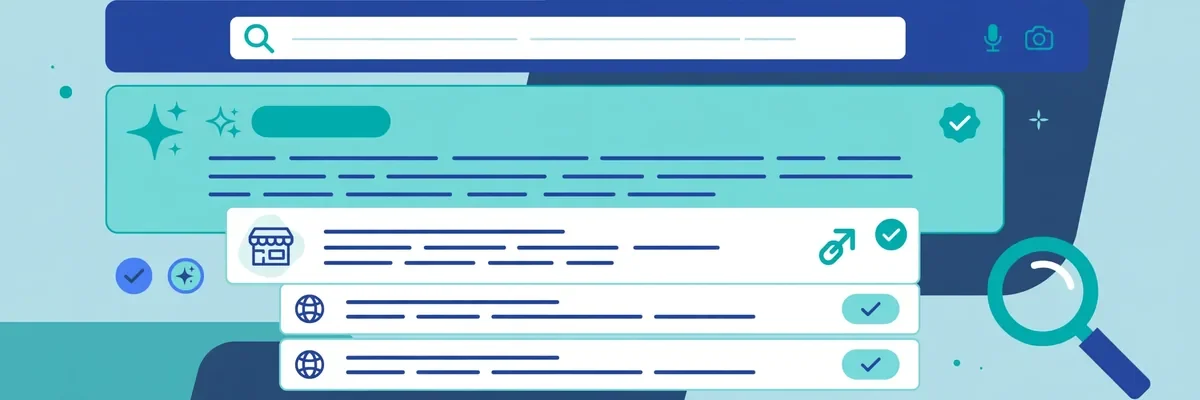
ChatGPT cites your competitors because their pages were easier to find, easier to verify and easier to name than yours. It is rarely about who is better at the work. It is about whose page was in Bing's index, whose answer could be lifted in one clean passage, whose facts carried a number or a source, and whose business ChatGPT could identify with confidence. Fix those four things, in that order.
How does ChatGPT search actually choose a source?
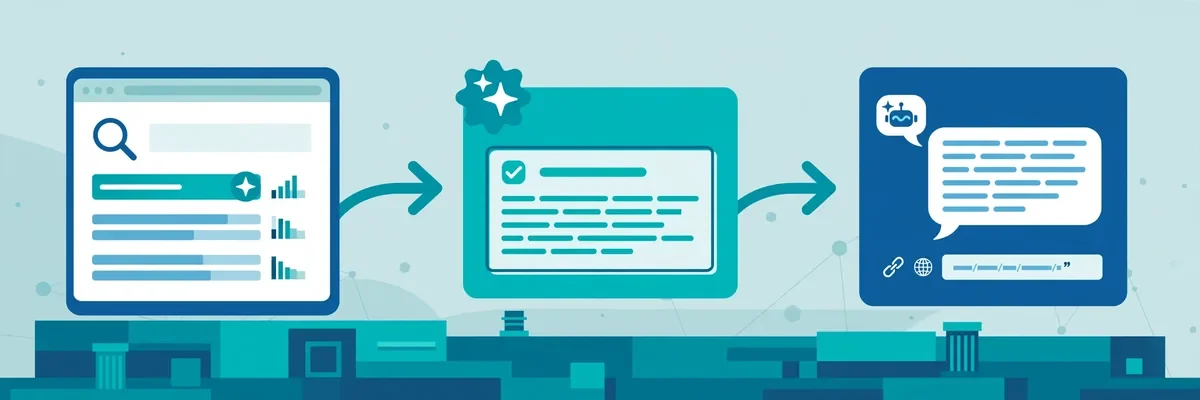
ChatGPT does not run your question as you typed it. It rewrites it into several of its own searches — different wordings, sub-questions, prices, reviews, locations. This is called query fan-out. Your page is judged against the questions ChatGPT wrote, not the one you optimised for.
Then it retrieves pages. OpenAI says ChatGPT search "leverages third-party search providers, as well as content provided directly by our partners", and names Bing among them. A page ChatGPT cannot find through Bing's index is very hard to cite. It also fetches pages itself: OAI-SearchBot builds the search index, and ChatGPT-User fetches individual pages. GPTBot is a different, training-only crawler — blocking it does not remove you from search, but blocking OAI-SearchBot does.
Next, it checks facts on the real sites — a price, a specification, a credential, a location. If your competitor states its price plainly and you bury yours in a PDF or an image, the model can confirm the competitor and not you.
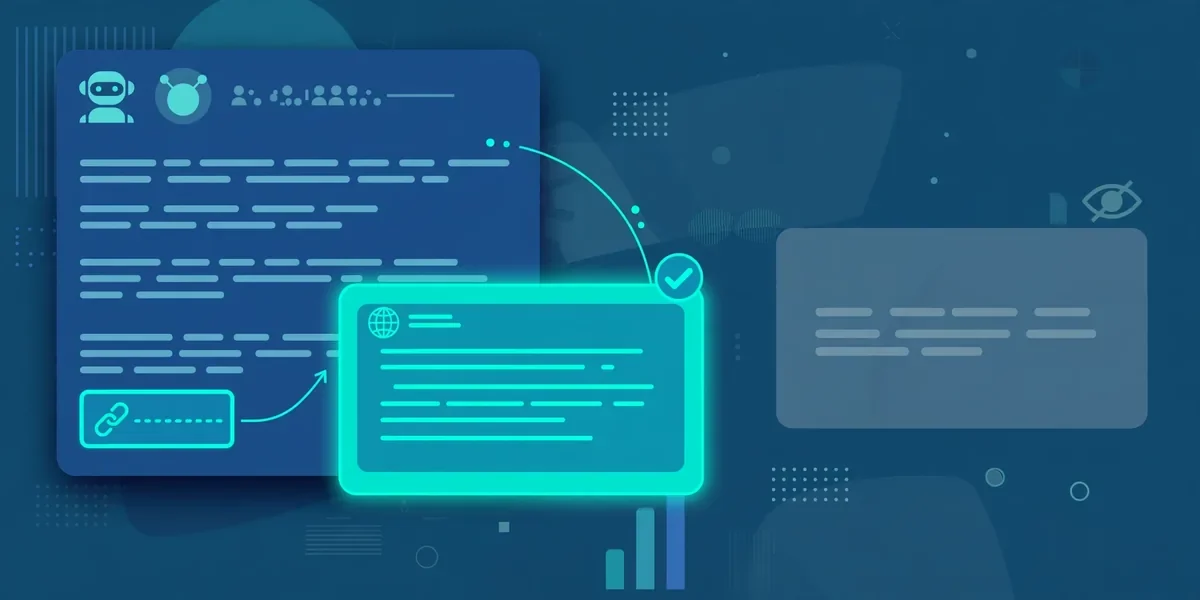
Finally, it writes one answer and names a few sources — often review sites, directories and publishers, not a business's own page. In one analysis of 23,387 citations for branded queries in January 2026, only 23% came from the brand's own content.
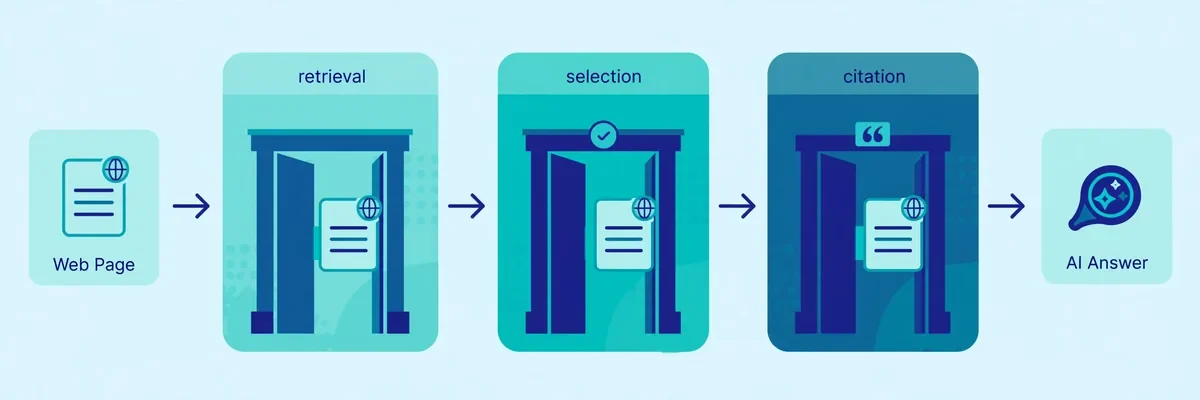
The GEO pillar on this site calls this three gates: retrieval, selection, citation. Fail any one and you are not cited.
Why are your competitors getting cited?
Work through these in order. The first one that is true for you is usually the answer.
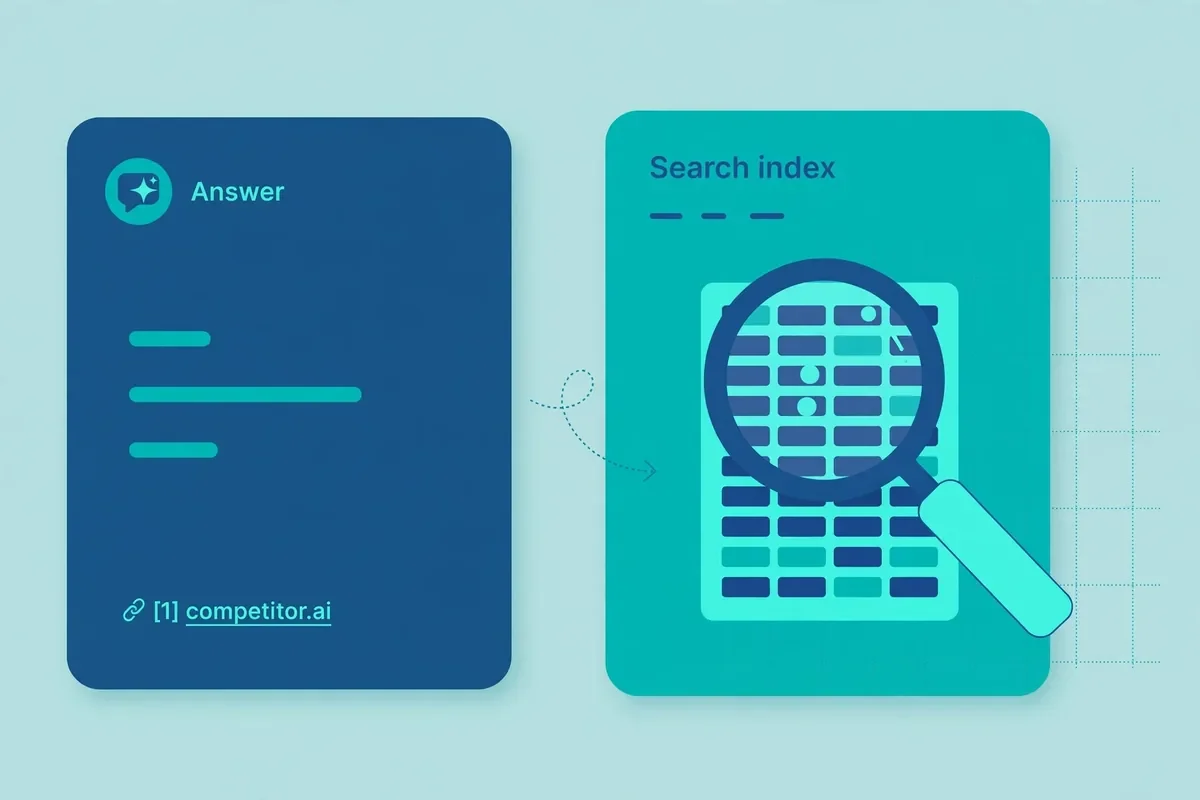
They are in Bing's index, and you are not. Many Dhaka businesses check Google and never check Bing. ChatGPT search builds on Bing's index, so a page Bing has not indexed cannot be retrieved, however good it is. Check this first, before rewriting a word.
Their crawler access is open, and yours is blocked. A robots.txt rule, firewall, CDN or security plugin can block OAI-SearchBot while leaving Googlebot untouched. Check robots.txt for OAI-SearchBot and ChatGPT-User, and that your host or CDN is not blocking them. This is separate from GPTBot: you can allow search crawlers and still block the training crawler.
Their facts are quotable, and yours are vague. "Many businesses save money with us" cannot be cited. "Our Dhanmondi clinic charges BDT 8,000–12,000 for a root canal, over two visits" can be checked and quoted. The Princeton GEO study found quotations, statistics and cited sources raised a page's share of an AI answer by roughly 30–40% in the lab (quotations +41%, statistics +33%, sources +28%; keyword stuffing −8%). Those are shares of answer words in a simulated engine, not traffic or live ChatGPT citations, and a later replication did not confirm them. No one can promise a citation, and this site does not.
Their business is easy to identify, and yours is not. Your competitor has a named author, credentials, an About page, and matching name, address and services on its website, Google Business Profile, LinkedIn and directories. You have no author and a different name on Facebook. When the model cannot tell who "you" are, it cites the business it can identify.
Their answers are answer-first, and yours are buried. Your competitor answers in the first two sentences, under a heading that asks the question. You answer in paragraph four. ChatGPT lifts passages, not whole pages.
They are mentioned elsewhere, and you are not. Mentions on directories, review sites and local lists build a model's confidence that a business is real. Do not buy them: Google says inauthentic mentions are not likely to help, and they break this site's white-hat rule. Earn real listings and reviews instead.
Why are you not cited, even when you rank on Google?
First, they are different pipelines: Google's AI Overviews draw on Google's index; ChatGPT search leans on Bing's. A page can be strong in one and absent from the other.
Second, ranking and quotability are different skills. A page can rank because it is long and well-linked, yet be uncitable because its facts are vague, its prices hidden and its author unnamed. ChatGPT selects passages, not pages.
Third, the answer may be built from third-party sources. If ChatGPT cites a directory for "best dentist in Dhanmondi", your competitor won because that directory lists them with a price, a rating and an address — and lists you with nothing.
Pew found clicks on a normal result fell from 15% to 8% of visits when an AI summary appeared, with only 1% clicking inside the summary. Ahrefs found position-1 click-through fell 34.5%, then 58%, when an AI Overview appeared. Those are click figures, not traffic guarantees — but ranking no longer guarantees being seen.
How do I find my exact gap?
Do this diagnosis before you change anything. It takes an afternoon, and it stops you fixing the wrong gate.
- Ask ChatGPT your buyers' real questions. Use 10–20 of them, same day, fresh chat, and note who is cited for each. Repeat monthly, same questions. One answer is a sample; a monthly panel is a measurement.
- Check Bing first. Search Bing for your key pages by exact URL and main question. If a page is not in Bing, that is gate one. Claim the site in Bing Webmaster Tools, submit the sitemap, and push new URLs with IndexNow.
- Check your crawlers. Read robots.txt. Is OAI-SearchBot allowed? Is ChatGPT-User allowed? Is your host, CDN or security plugin blocking them? Test the live page, not just the file.
- Compare one cited competitor page with yours. Who answers first, gives a number or price, and names an author? The gap is usually visible in one minute.
- Check your entity. Do your website, Google Business Profile, LinkedIn and directories agree on name, services, address and phone? Is there a named author and an About page?
- Check the third-party pages. Who is cited when neither of you is? Are you listed there, complete and current? If not, that listing is your next job — not another blog post.
What do I fix first?
Fix in gate order. Do not start with writing.
Gate 1 — retrieval. Get indexed in Bing. Allow OAI-SearchBot and ChatGPT-User. Submit the sitemap, push URLs with IndexNow, and fix any noindex, nosnippet or max-snippet:0 rule that keeps a page out of snippets. Google's guidance is the same shape: a page must be indexed and snippet-eligible, with no additional requirements. If a page is not retrievable, nothing else matters yet.
Gate 2 — selection. Make your best pages answer-first and quotable: answer in the first two sentences, under a heading that asks the question, replace vague claims with a number, quotation or linked primary source, and name the author. Do your five most important pages first.
Gate 3 — citation. Align your name, services and facts everywhere. Earn real listings and reviews on the directories ChatGPT already cites for your category, and link them to the GEO pillar and the AEO vs GEO vs SEO article.
Then measure again: same panel, a month later. Count citations, not just rankings. Track ChatGPT referrals in GA4 (OpenAI says they include utm_source=chatgpt.com) and AI Overview impressions in Search Console. Indexed but still uncited after a month? The problem is citability or authority, not plumbing. Still not indexed? It is still gate one.
What will not fix this?
- llms.txt as a citation trick. Google Search does not use new machine-readable files or AI text files for its AI features, and ignores llms.txt. OpenAI has not documented llms.txt as a way into ChatGPT search either.
- Special "AI schema". There is no special schema.org markup for AI features. Standard Article and FAQPage schema that matches the visible text is enough.
- Keyword stuffing. Princeton measured it as worse than doing nothing (down about 8%) — it makes passages less quotable, not more.
- Rewriting everything for AI. Google's May 2026 guide is blunt: optimising for its AI features is still SEO. The same foundation is what ChatGPT needs too.
- Bought or planted mentions. They are not likely to help, and they break the white-hat rule this site works by.
Frequently asked questions
Why does ChatGPT cite my competitors instead of me?
Because their pages were easier to find through Bing, easier to verify with a number or a source, and easier to name as a real business. Run the six-step diagnosis to find your failing gate — retrieval, selection or citation.
Do I need to be on Bing for ChatGPT to cite me?
In practice, yes. ChatGPT search retrieves through Bing's index among its third-party providers, and a page Bing has not indexed is very hard for it to cite. Claim the site in Bing Webmaster Tools, submit the sitemap and push new URLs with IndexNow. That is a baseline, not a guarantee of citation.
Should I block GPTBot to stop ChatGPT using my content?
Blocking GPTBot opts you out of training, not search. ChatGPT search uses OAI-SearchBot and ChatGPT-User, separate crawlers with separate robots.txt settings. If you block OAI-SearchBot, OpenAI states your site will not be shown in ChatGPT search answers.
Can I appear in ChatGPT answers without ranking on Google?
Yes. ChatGPT search leans on Bing's index, not Google's, and it often cites directories, review sites and publishers rather than any business's own page. Ranking on Google does not put you in Bing, and being cited by ChatGPT does not require a Google ranking.
How long does it take to start getting cited?
Indexation and crawler fixes can make a page eligible within days to weeks. Citations build over weeks to months. A realistic first checkpoint is a 90-day prompt-panel comparison against your baseline, not a ranking report after one week.
What to do next
Do the jobs in gate order: get retrieved, make your page selectable, then make your business citable. Ranking on Google but never cited by ChatGPT? Start with steps 2 and 3 of the diagnosis — Bing indexation or crawler access, not your writing.
Every engagement starts with a free audit. Request one — it now includes an AI-visibility check: crawler access, Bing and Google indexation, and a 10-prompt citation test across ChatGPT, Perplexity and Google.

Abu Hosain
Digital Marketing Strategist & White-Hat SEO Expert — 7+ years helping businesses worldwide grow with SEO, AEO and GEO.